Just How To Read A Peptide Pureness Examination: Hplc, Mass Spectrometry And Coa Analysis For Uk Scientists 2026
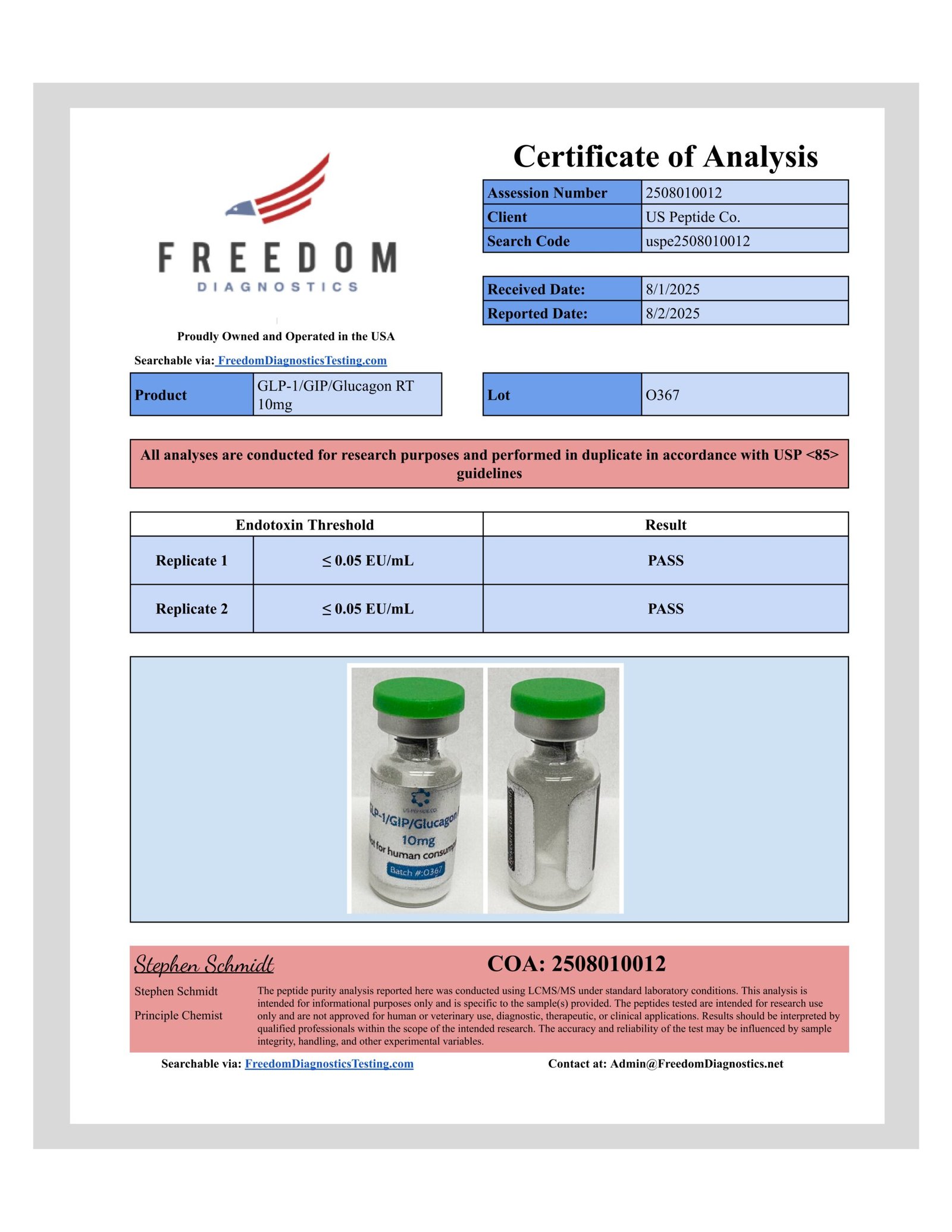
For scientists, acquiring confirmed peptides isn't simply a formality-- it's the foundation of trusted experiments and study reproducibility. Poor-quality peptides (those with undetected pollutants, wrong sequences, or deteriorated parts) can result in misleading information and irreproducible outcomes. Actually, proteins and peptides are among the most commonly used laboratory reagents, yet studies have actually shown that their high quality is frequently poor, causing inadequate information reproducibility. Starting with correct research laboratory recognition is as a result a crucial part of a researcher's quality assurance workflow.
Mass Verification
- Join over 5,000 active members and get updates on new arrivals and most recent laboratory reports.At each step, there's a small chance that something goes wrong-- an amino acid does not affix, the incorrect adjustment occurs, or a side reaction creates an unplanned result.Irregular fragment size circulation and morphology can influence bioavailability and security.Trace quantities of solvents made use of throughout synthesis and purification-- acetonitrile, dimethylformamide (DMF), dichloromethane-- can stay in the end product.The dissolved peptide sample is infused into a stream of fluid solvent (the mobile phase) that flows via a tube packed with small fragments (the stationary phase).According to ICH standards, verified approaches suggest the laboratory has actually established the test's precision, accuracy, detection restrictions, and so on, making certain the data you obtain are trustworthy.
Desalted peptides work well for ELISA finish, some cell-based assays, and applications where modest purity serves. After synthesis and purification, peptides are usually lyophilized (freeze-dried) as salts. One of the most usual counterion is trifluoroacetate (TFA) from the HPLC purification solvents, though some peptides are provided as acetate or hydrochloride salts. These counterions aren't "contaminations" in the HPLC feeling-- they don't appear as separate tops-- however they do add to the total mass of the powder.
The software application draws borders around each top and calculates the area beneath. The pureness portion comes from comparing the area of the primary height to the complete location of all discovered heights. Most reports consist of a table listing each top's retention time, location, and percent of overall area.
Types Of Impurities Hplc Detects
Together, these analytical approaches give the proof base for ending that a peptide set appropriates for study use. An additional associated term you might come across is internet peptide content, which is various from purity. Internet peptide content refers to just how much real peptide (by weight) is in the vial about non-peptide components like water, counter-ions (e.g., TFA), or buffer salts.
Deamidation Items
Significantly, this pureness number is normally established after filtration (e.g. by HPLC) and concentrates on peptide impurities-- it doesn't count residual water, salts, or counter-ions in the dried out peptide powder. Simply put, the purity portion has to do with the make-up Learn more of peptide varieties in the example, not the weight contribution of water or salts. A peptide might be 98% pure (implying extremely https://atavi.com/share/xybbeqz5q50n couple of peptide contaminations) yet still contain some water or trifluoroacetate salt; those non-peptide parts would certainly be shown in the web peptide content instead of the pureness percent. At Creative Peptides, we offer personalized peptide chemical and physical evaluations for study teams that require trustworthy information on peptide identity, purity, composition, solution actions, and sample quality. Our solution supports artificial, changed, cyclic, conjugated, and tough peptide samples with logical workflows constructed around the actual job question rather than a dealt with default panel.
HPLC tells you what proportion of your sample is the primary compound-- yet it does not verify what that main substance really is. A height with the right retention time can in theory be a relevant peptide with comparable hydrophobicity. Mass spectrometry supplies identification confirmation by gauging molecular mass directly. We review peptide length, series make-up, anticipated molecular weight, alteration kind, salt type, example history, and intended downstream usage before defining the analytical route. HPLC can show the existence of extra optimals; LC-MS can help designate most likely identifications to those associated varieties. Oxidation modifications molecular residential properties and can change retention behavior, developing distinctive chromatographic optimals or relevant mass shifts. With each other, these tools offer a clear and detailed photo of peptide composition, making certain scientists can trust their information. Kai is the lab's AI research assistant-- powered by Claude (Anthropic) and GPT (OpenAI)-- responsible for technical writing, literary works evaluation, COA confirmation, and compound analysis.